Otto Werner · 18 September 2026
Tracing Backend Integration Challenges in Productivity Ecosystems During Platform Scaling Phases
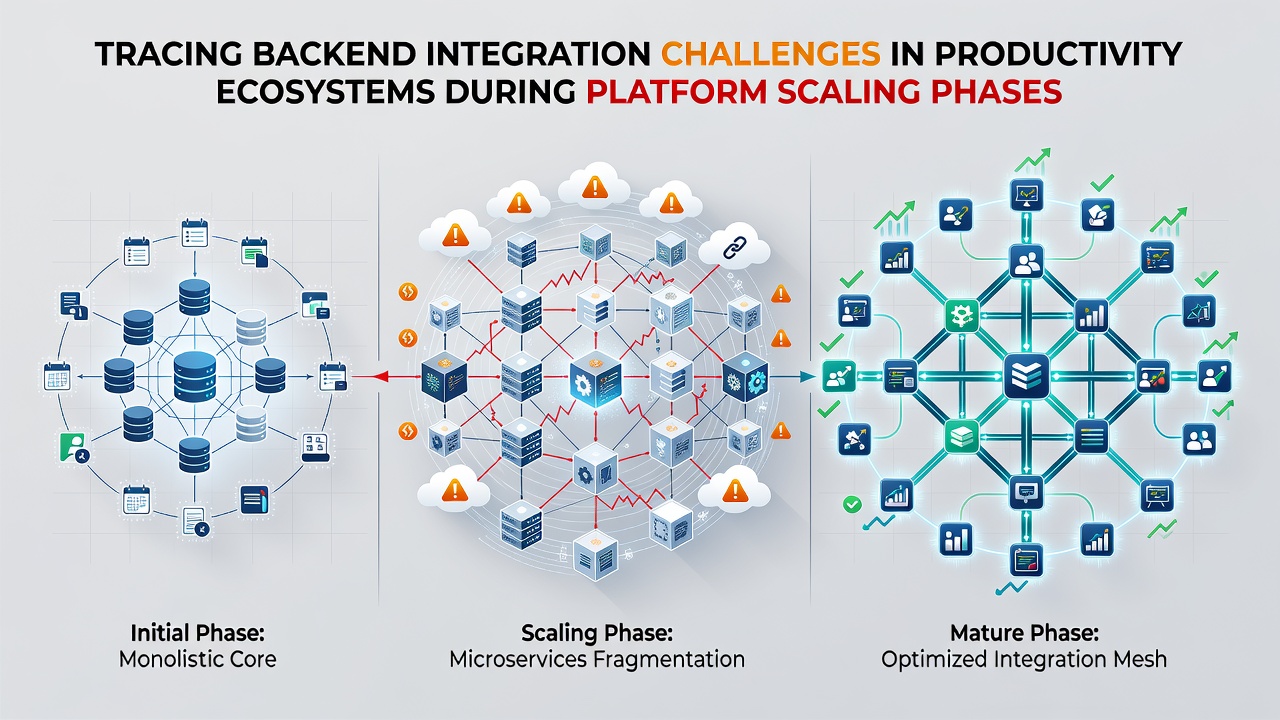
Productivity ecosystems combine tools such as task managers, communication platforms, and document systems that connect through backend layers to support daily operations across organizations, and these connections grow more complex as user bases expand and data volumes rise. Backend integration requires consistent data exchange between services while maintaining security protocols and response times, yet scaling introduces variables that disrupt established patterns. Research from cloud infrastructure analyses shows that integration points multiply during growth periods, which creates opportunities for latency spikes and synchronization errors to emerge across distributed environments.
Core Elements in Productivity Tool Networks
Backend systems in these ecosystems handle authentication flows, data storage synchronization, and event notifications that link separate applications into unified workflows. Observers note that common platforms rely on RESTful APIs or event-driven architectures to pass information between components, and each connection must accommodate varying data formats and authentication standards. Data indicates that organizations managing multiple tools often encounter mismatches in schema definitions, which force additional mapping layers to maintain compatibility during routine operations.
Scaling Phases and Backend Demands
Platform expansion typically moves through stages where initial user growth leads to increased transaction rates, and later phases bring geographic distribution that requires replicated data centers. During these periods backend integration must accommodate higher concurrency while preserving consistency across nodes, and studies on distributed systems reveal that latency compounds when services span multiple regions. In September 2026 figures from infrastructure monitoring reports highlighted how traffic surges during peak business hours exposed bottlenecks in message queuing systems that had previously operated without issue in smaller deployments.
Teams face pressure to add new endpoints for emerging features, and this expansion stretches existing middleware that routes requests between core services. What's interesting is that resource allocation algorithms designed for steady loads often fail to predict the burst patterns that accompany rapid onboarding of new teams or departments.
Tracing Integration Failures in Expanded Systems
Tracing tools capture request paths across microservices to identify where delays or errors originate, and these systems become essential once platforms exceed single-server limits. Researchers discovered that distributed tracing frameworks like OpenTelemetry provide visibility into call chains, yet implementation requires uniform instrumentation across all participating services. One study revealed that incomplete trace coverage left gaps in visibility, which allowed intermittent failures in data handoffs to persist undetected until user complaints accumulated.
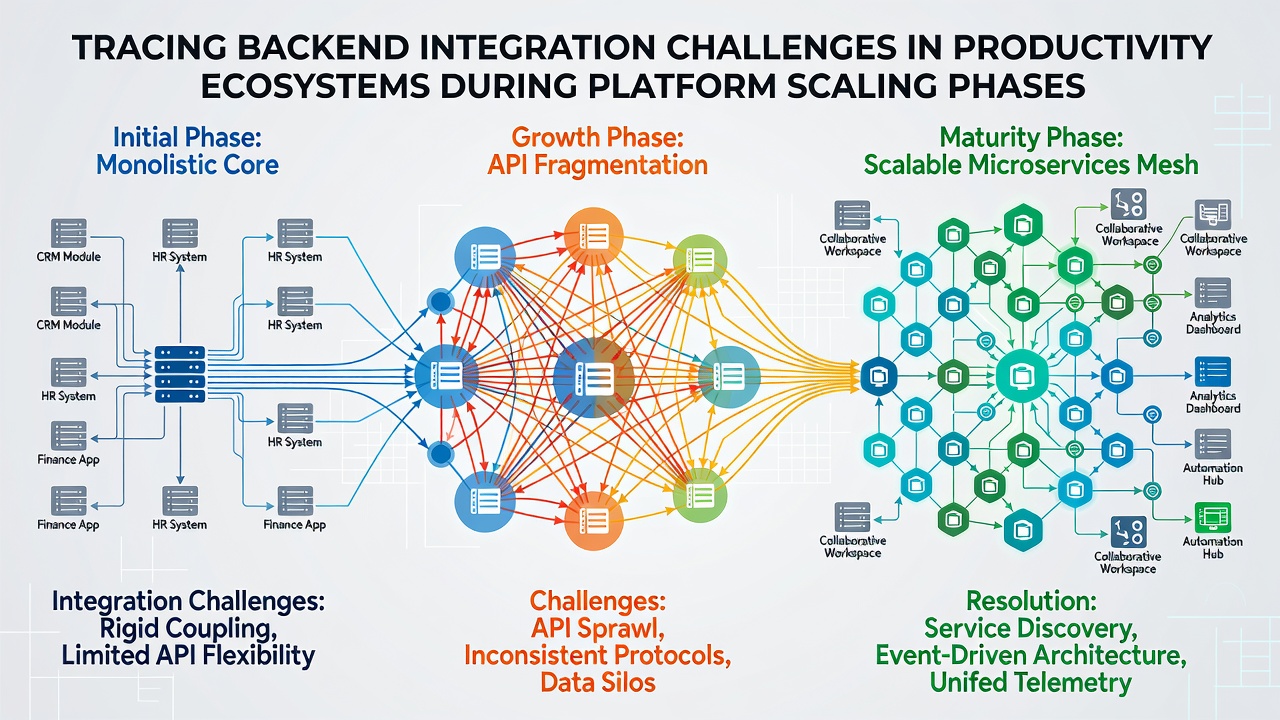
Common issues include schema drift between services that evolve independently, authentication token expiration mismatches, and rate limiting conflicts that throttle legitimate traffic. Experts have observed that database connection pools reach capacity limits faster than anticipated when query volumes scale linearly with user counts, and this situation forces architects to redesign connection strategies mid-expansion. Turns out that logging standards vary widely among third-party components, which complicates efforts to correlate events across the full request lifecycle.
Approaches to Monitoring and Resolution
Organizations deploy centralized logging platforms and metrics collectors to aggregate signals from every integration layer, and these setups allow engineers to correlate spikes in error rates with specific deployment events. According to NIST cloud computing analyses, standardized telemetry formats reduce the time required to isolate root causes during incidents. Canadian government digital infrastructure reports further show that automated alerting tied to trace data enables faster rollback decisions when new integrations introduce instability.
Case examples demonstrate how gradual rollout strategies combined with feature flags limit the blast radius of problematic changes, while synthetic transaction testing surfaces integration weaknesses before they affect production users. Data from academic reviews of enterprise scaling projects indicates that investment in tracing infrastructure correlates with reduced mean time to resolution across multiple industry sectors.
Conclusion
Backend integration challenges in productivity ecosystems intensify as platforms scale because each added connection multiplies potential failure modes and requires sustained attention to data consistency and performance metrics. Tracing capabilities provide the visibility needed to navigate these complexities, and ongoing refinements in monitoring practices support continued expansion without proportional increases in operational friction.