Sam Hayes · 16 October 2026
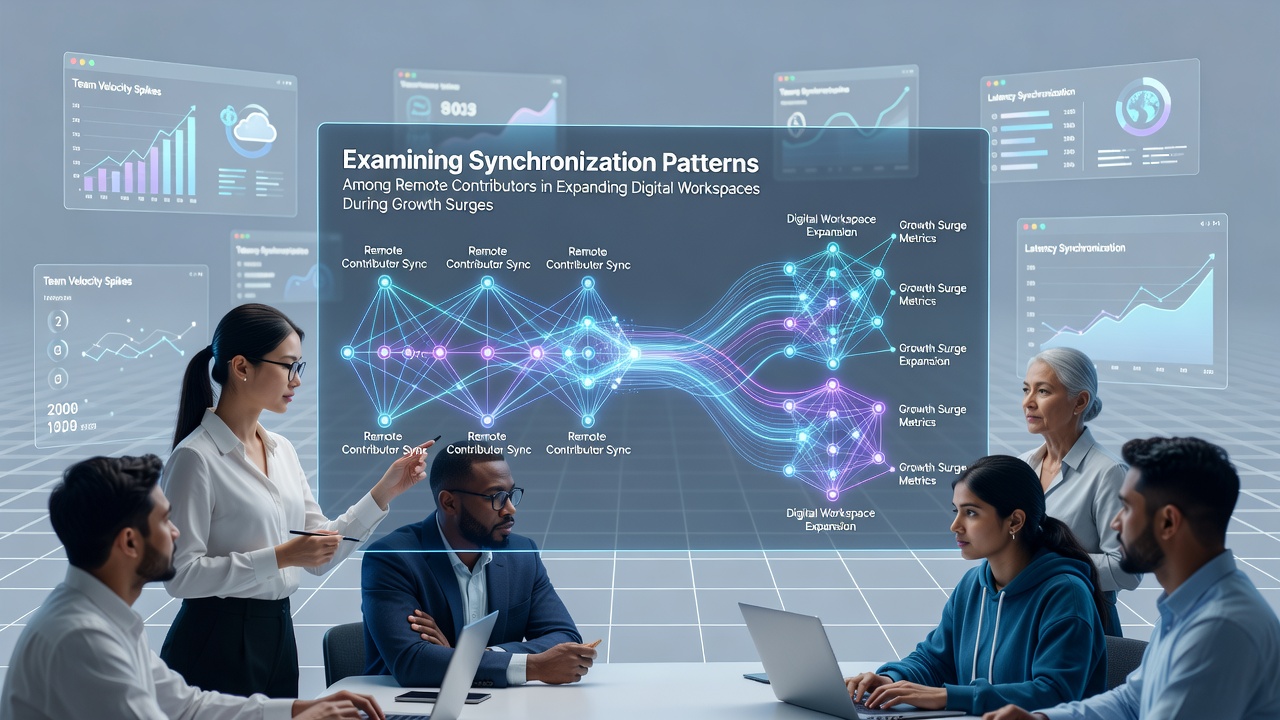
Examining Synchronization Patterns Among Remote Contributors in Expanding Digital Workspaces During Growth Surges
Remote contributors in expanding digital workspaces often display distinct synchronization patterns that emerge most clearly during periods of rapid organizational scaling, and these patterns reflect coordinated adjustments in communication timing, tool usage, and task alignment across distributed teams. Data from multiple regions indicate that such synchronization tends to intensify when headcount increases exceed 20 percent within a single quarter, leading contributors to cluster their activity around shared digital platforms rather than isolated workflows.
Patterns Observed in Scaling Environments
Researchers tracking contributor activity logs across cloud-based collaboration suites have identified recurring cycles where overlap in active hours rises by approximately 15 to 25 percent during growth surges, particularly when new hires join existing squads. These cycles frequently involve morning alignment sessions followed by asynchronous updates later in the day, allowing participants in different time zones to maintain continuity without constant real-time presence. In October 2026, aggregated platform telemetry from several enterprise deployments showed that teams exceeding 50 remote members relied more heavily on threaded discussion channels and version-controlled document repositories to preserve context across staggered schedules.
Contributors also demonstrate increased use of status indicators and automated check-ins during these phases, which helps surface availability windows and reduces friction when dependencies span multiple regions. One longitudinal analysis of productivity ecosystem logs revealed that synchronization density, measured by concurrent edits and message exchanges within shared spaces, correlates with milestone delivery rates in expanding organizations, although the strength of this correlation varies by industry sector and tool configuration.
Technological and Structural Influences
Digital workspace platforms incorporate features such as integrated calendars, real-time co-editing, and notification routing that directly shape how remote contributors align their efforts. When organizations add new tools mid-expansion, contributors tend to gravitate toward those with built-in presence signals, and this preference appears in usage statistics collected by vendors serving multinational clients. Studies conducted by academic teams at institutions in Canada and Australia have documented that teams adopting unified notification systems experience fewer instances of duplicated work during growth periods compared with those maintaining fragmented toolsets.
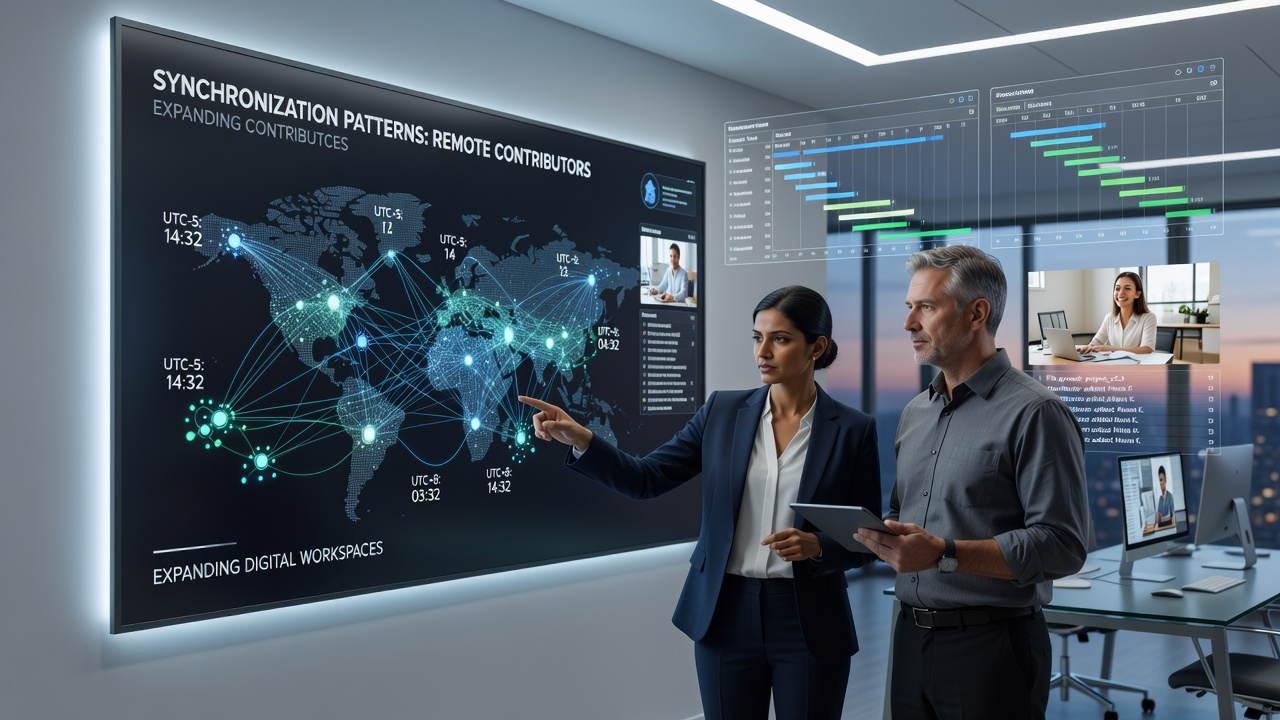
Structural changes accompanying growth, including the introduction of new reporting lines and cross-functional squads, further influence synchronization. Contributors adjust their routines to accommodate overlapping governance meetings, and platform analytics show elevated activity in project management modules during the weeks following such restructurings. According to findings published by OECD researchers examining digital economy trends, organizations that standardize core workspace applications before scaling observe more stable synchronization metrics than those introducing multiple new systems simultaneously.
Regional Data and Comparative Insights
Comparative data from North American and European deployments indicate that synchronization intensity differs by regulatory environment and prevailing work-hour norms. Teams operating under stricter data residency requirements often route more coordination through encrypted internal channels, which can compress active overlap windows yet maintain overall output consistency. In contrast, contributors in regions with greater flexibility in scheduling exhibit broader distribution of activity peaks across the workday. A 2026 compilation of workforce statistics from Statistics Canada highlighted that remote cohorts in technology and professional services sectors increased their use of shared digital whiteboards by 30 percent during documented expansion phases, providing visible traces of collective progress without requiring simultaneous attendance.
Additional observations from industry reports note that contributor retention during growth surges correlates with the perceived reliability of synchronization mechanisms, although this link appears mediated by prior experience with distributed tools. Platform operators have responded by releasing analytics dashboards that surface synchronization health indicators, enabling teams to identify drift early and adjust protocols accordingly.
Conclusion
Examination of synchronization patterns among remote contributors reveals consistent adaptations to the demands of expanding digital workspaces, driven by measurable increases in activity clustering, tool standardization, and structural realignment. Available evidence from October 2026 deployments underscores the role of platform design and organizational timing in shaping these patterns across varied geographic and regulatory contexts. Continued monitoring through platform telemetry and cross-regional studies will supply further data on how such synchronization evolves alongside ongoing workspace scaling.